
Line Tracing Robot
Autonomous IR-guided robot
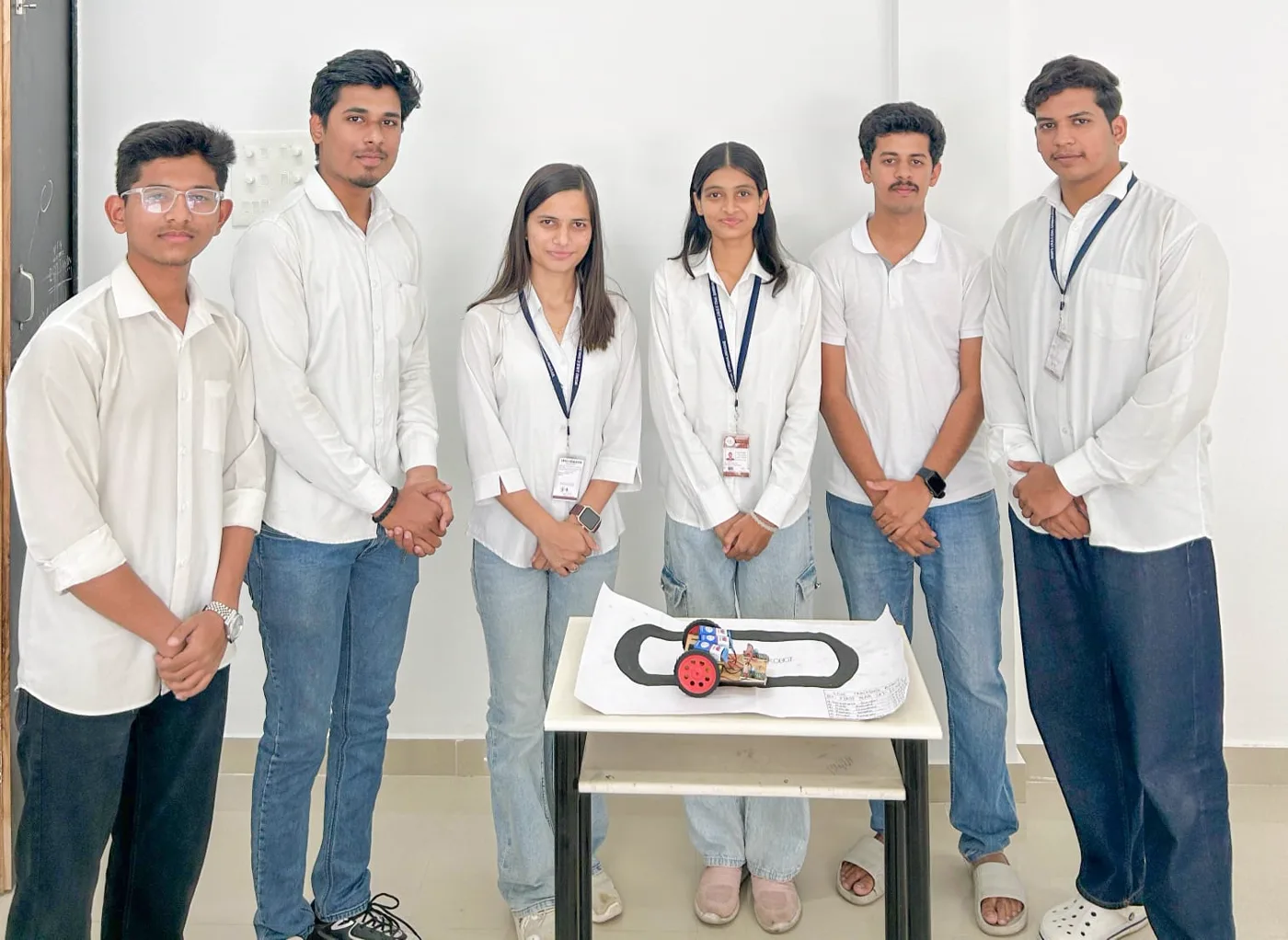
Demo · On the track
“A black line, a white sheet and two IR sensors. That's all it needs to find its way.”
— Shaikh Farhan
The robot follows a taped track on its own. Whenever a sensor drifts onto the black line, that side's motor slows and the robot turns back on course.
A small autonomous robot that follows a black track on its own. Two infrared sensors read the floor and steer the wheels, with no microcontroller and no remote control. It won Runner-Up at MGM University's National Science Day 2025.
Level · Beginner · Why it’s here
Our first hardware build, made in the first year of B.Tech. It is a simple robot on purpose: no code and no microcontroller, just sensors, transistors and motors wired by hand. It taught us how electronics actually behave, and it still placed Runner-Up at National Science Day.
The problem
Warehouses, hospitals and factories use guided vehicles that follow fixed paths. We wanted to show the physics behind them, light reflected by white and absorbed by black, in a robot simple enough to build by hand.
Highlights
- 01Two IR sensor modules (transmitter + photodiode) read the surface: white reflects infrared, the black line absorbs it.
- 02Each sensor drives its own transistor motor driver, so steering happens directly in hardware: left sensor on the line turns left, right sensor turns right, both on white drives straight.
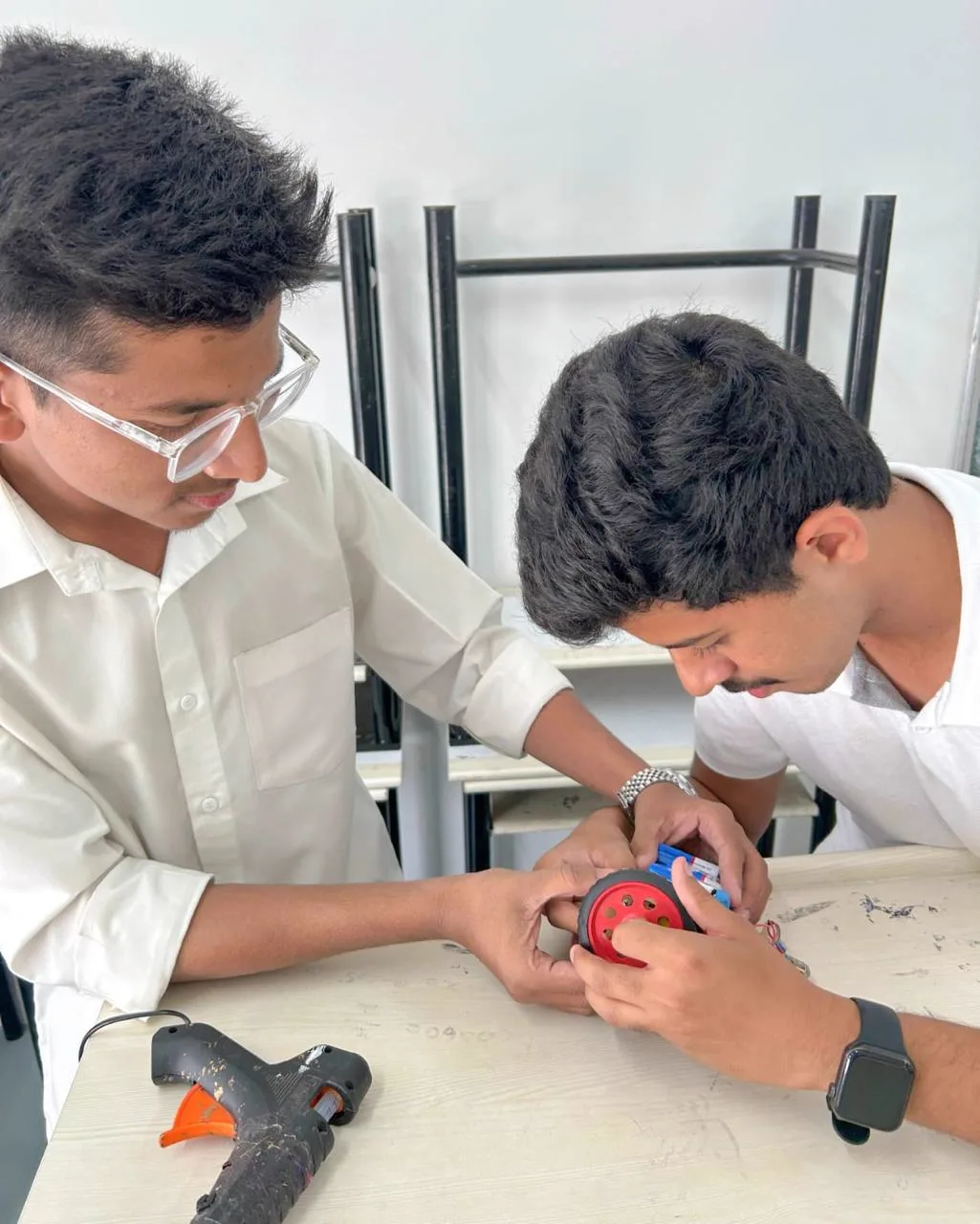
- 03Built by hand on a wooden chassis with two DC motors, three 9V batteries, a power switch and LED status indicators.
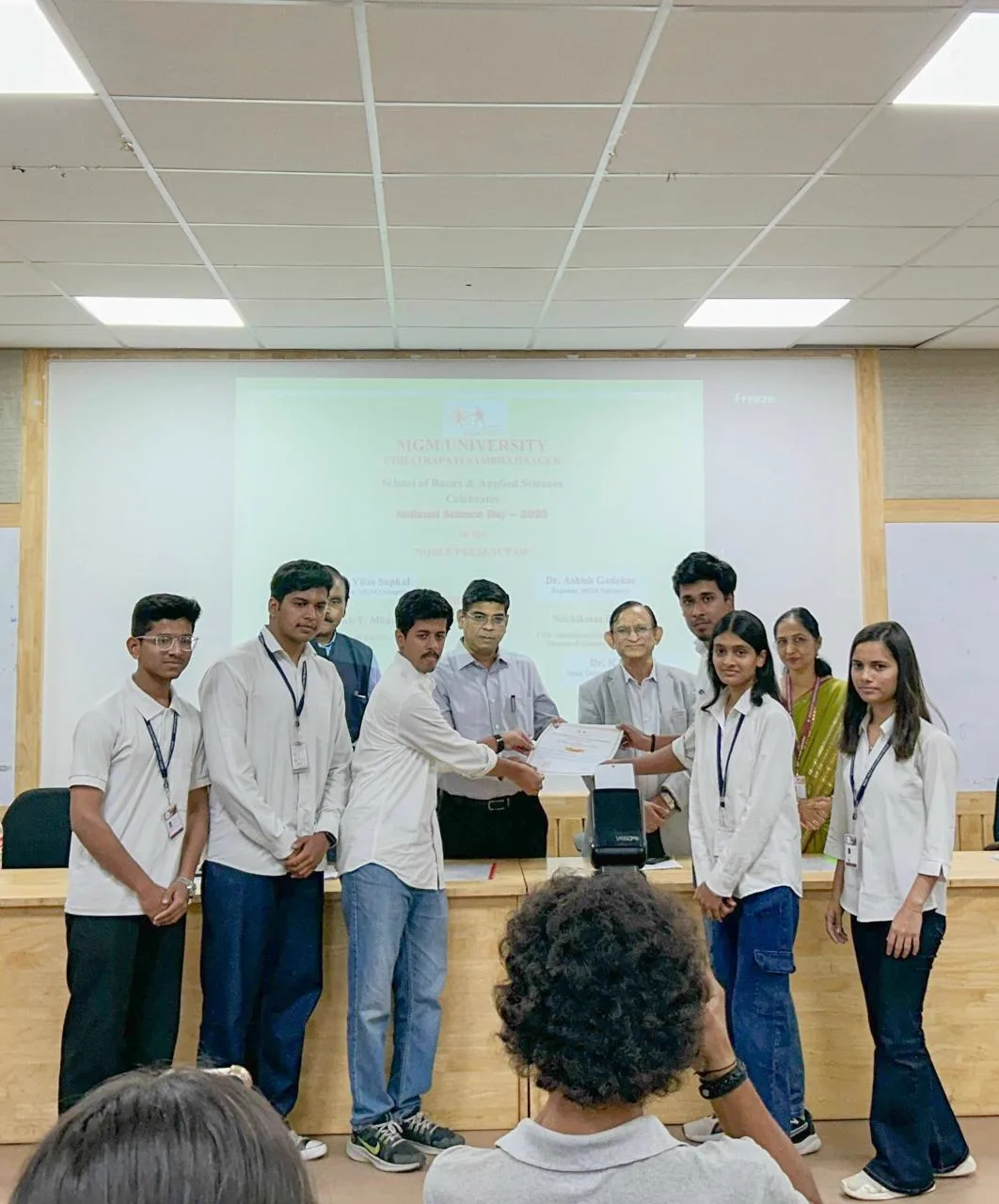
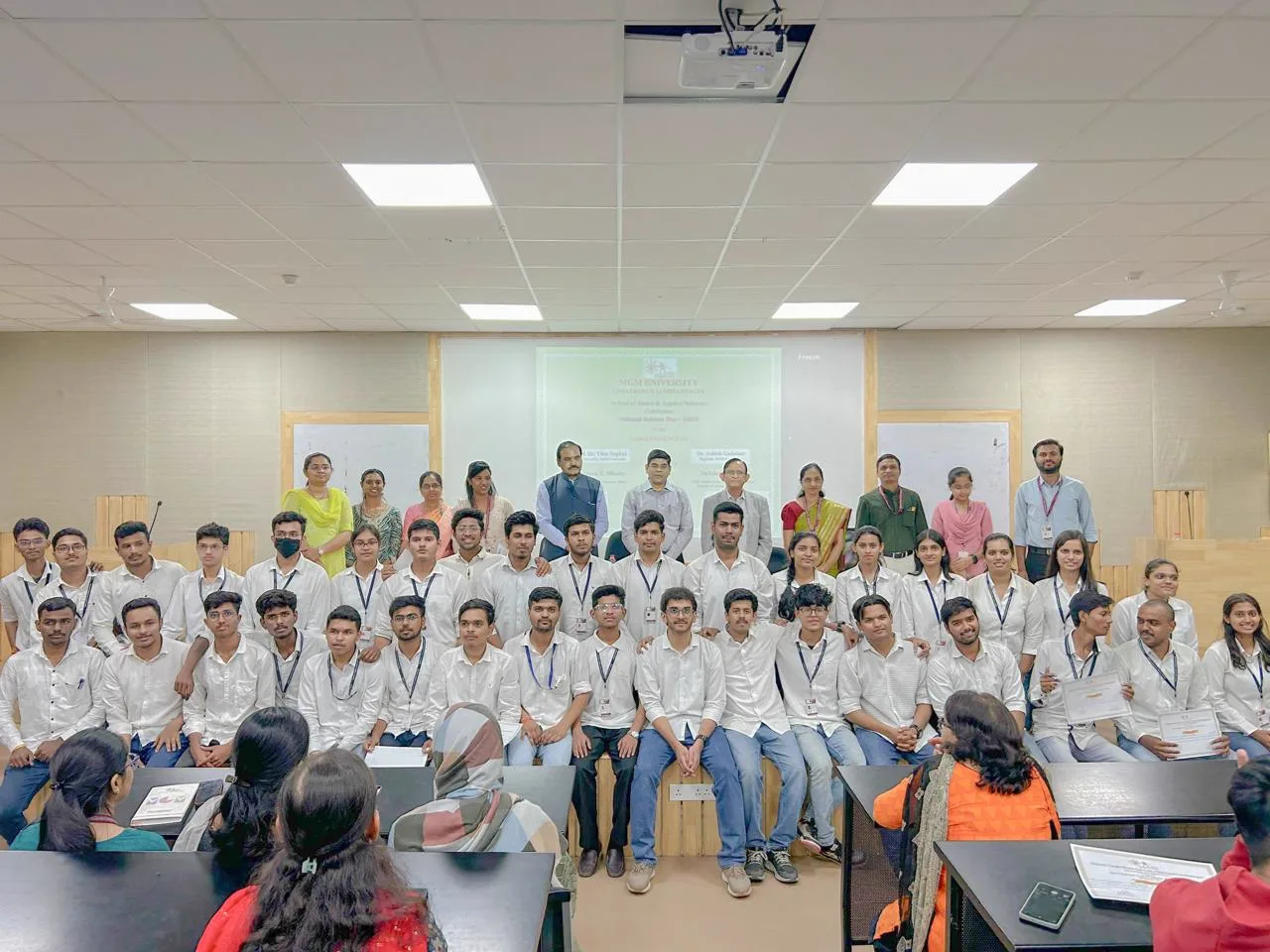
- 04Runner-Up at National Science Day 2025, School of Basic & Applied Sciences, MGM University.
- 05Team: Shaikh Farhan, Avnish Choudhari, Harshwardhan Limkar, Darshani Gunjal, Aditi Kalushe and Mridul Pardeshi.
What’s inside
Reflection sensing
IR LEDs light the floor; photodiodes see a strong reflection on white and almost none on the black line.
Hardware steering
Sensor signals switch the motor drivers directly, slowing one wheel so the robot turns back onto the line.
Handmade build
Wooden chassis, two geared DC motors and wheels, battery pack, switch and jumper wiring, all assembled by the team.
Real-world idea
The same principle guides AGVs in warehouses, medicine carts in hospitals and self-parking systems.
On the ground
Next project
CSMC Citizen Portal